Grandma Magic Podcast Episode 31: Dr. Kathleen Walls, Powerhouse in Leadership Development, Communication and Personal Transformation
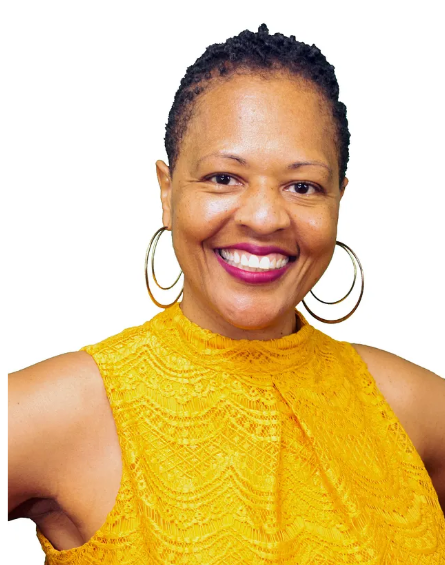
Dr. Kathleen Walls is a powerhouse in leadership development, communication, and personal transformation. With a rich career spanning academia, consulting, NGO work, and authoring a children’s book series, to name a few, she is deeply rooted in values of togetherness, open intergenerational conversation, and the guiding belief that “As I heal, you heal.” Growing up in a progressive family environment in Pennsylvania, surrounded by strong, wise grandmother figures, Dr. Walls shares the profound impact of having older women in all phases of life — women who offer connection, wisdom, and life stories that shape and inspire. Throughout this episode, Dr. Walls reflects on her ever-expanding mosaic of passions and projects — each piece adding its own vibrant color to the larger picture of her legacy.
Transcript
Lynsey Farrell (Host): Welcome to Grandma Magic, a podcast from the Grandmother Collective. We are a nonprofit organization that supports and advocates for a world where a grandmother’s power is seen, cultivated, and activated for positive change. The Grandma Magic podcast is an opportunity to learn more about the unique roles that grandmothers, aunties, and other older women around the world play in advancing positive social development.
By talking to, and learning from, grandmother changemakers. We hope this series inspires you, brings you joy, and helps you recognize the enduring magic and wisdom that comes from grandmothers everywhere. My name is Lynsey Farrell, and I’m your host.
Today we’ll be speaking with Dr. Kathleen Walls. Dr. Walls is a powerhouse in leadership development, communication, and personal transformation.
As the founder of G.R.E.A.T.E.S.T. Counseling & Consulting in Philadelphia, she has spent more than 20 years guiding individuals and organizations toward unlocking their fullest potential. With a doctorate in clinical psychology and a deep belief in systems change, she specializes in helping people move through different levels of consciousness to lead lives with purpose.
She’s a sought after keynote speaker, a coach and consultant, and facilitates crucial conversations around leadership, equity, mental health, and personal growth. Beyond her consulting work, Dr. Walls is an author and advocate for youth development. She’s written The Adventures of Froggy T and Bunnie, a children’s book series designed to help young readers increase emotional intelligence, develop critical thinking, and build social awareness, empathy, and self regulation skills. Through engaging stories, her books encourage kids to recognize and manage their emotions, communicate effectively, and make thoughtful decisions. She’s also co-founded Sisters 4 Harmony, a non-profit focused on empowering women and fostering collective healing and growth. I am so excited to have Dr. Walls here today. Welcome Kathleen. And we’re so excited to have you here today.
Dr Kathleen Walls: Thank you so much for inviting me. I’m super excited to talk about grandmothers.
Lynsey Farrell (Host): So actually that’s where I wanted to start. When we chatted last week, before coming together for this podcast, you had really said that you have a lot of grandmas in your life, and that’s been really foundational. Do you have a favorite grandma? Do you want to talk about, like, the role that grandmothers have played?
Dr Kathleen Walls: Yes, definitely. Thank you for asking. I know one of the things that I shared with you was that by the time I was between the ages of five and seven, that I had come home and told my parents, I knew what I wanted to be when I grew up, and that was to be a grandmother. And when they asked me why, I said, one, because they love you and when they get tired of you, they get to drop you off. And two, because they have the best purses. There’s always a piece of gum, a peppermint and a butterscotch. So what more could you want out of life? And when my mother told me, well, you have to be a mother first. I said, I don’t want to be one of those.
I just want to be a grandmother. And so she said, that’s not how it works. I said, don’t worry, I’ll figure it out. So I kind of spent my life with that in the back of my head. And then I met my husband who had a son by his first wife and he’s, you know, now in his thirties and he just had two children.
So here I get to be a grandmother and I don’t have any birth children. So I’m like, yes, I get to be a grandmother first.
Lynsey Farrell (Host): You showed them you were going to be a grandma when you grew up!
Dr Kathleen Walls: Come on.
Lynsey Farrell (Host): Without having to go through all that other stuff.
Dr Kathleen Walls: That’s right. Forget all that. And I love them. I love them. And they live in California. So I get to visit and then I get to come home. So, we get to FaceTime due to technology. But to your question about grandmothers, I mean, my mother’s mother, my, and I called her grandmom, she was just my favorite person.
Like, that was who I loved to spend my time with. And so we’re talking back in the 70s and 80s, so I could sit in the front seat right next to her, you know, and we could.
Lynsey Farrell (Host): On the bench seats. In the old station wagon. It didn’t have that thing in the middle.
Dr Kathleen Walls: It did not. It did not. So it was perfect. And it was she and I. And I used to have a trundle bed, and I don’t know if you know what a trundle bed is, so for those who are listening, it’s that bed that tucks away underneath the main bed and then you can pull it out and lift it up. And so whenever she would come over, we’d pull the trundle out and she would join me and it would just be absolutely wonderful. And she’d try to get up and leave before I would wake up.
And I’d be there with like one eye open, like where do you think you go, and I see you. I loved spending time with her so much that when she would leave, I would have tantrums. I just missed her when she would try to go and my parents, sometimes it would be so bad, they would actually put me in the car to drive, she lived in West Philadelphia and we lived in Germantown, and so they would put me in the car to take me to her.
And I would have worn myself out from crying that I would fall asleep in the car, but it was just like they knew they had to quote, unquote, start the process and then they would take me back home and put me in the bed and I’d wake up fine. But that’s how much I just loved spending time with her. My father’s mother was very different in her demeanor and the way that she carried herself.
So we didn’t have that same type of closeness, and she was Nana. Because she had said that she was too young to be a grandmother, even though she was well into her fifties and almost sixties when we came be-bopping along. But she was just very different. She was very stylish and my grandfather was the town doctor.
So she had a certain level of status and clout. But my mother’s mother, who was the grandmom, she was the, it doesn’t matter if you got crayons, markers. Come over here. Hug me. Sit on me. Love me. So it was just a very different dynamic. And then we had other elderly women in our lives who played those grandmother roles and Mrs. Janerrette was one of those. I feel like I’m giving libations and calling out my elders, and Mrs. Janerrette was one that we would go spend time with and we’d sit and she would tell stories, but also she would listen to our stories, myself and my siblings. She was one. And then even as a, young woman, I remember a person I was dating, his grandmother instantly became my grandmother and she lived to be 101.
And even though she suffered from Alzheimer’s, she always knew my voice. And they would be amazed even when she was, having a lot of difficulty. I would call on the phone or I’d go visit and she’d be like, Kathy. And I’ll be like, yes, ma’am, it’s me. Using what, when I say ma’am to anybody it’s because of her. So they lived in the South and that was a Southern thing that you would, use the ma’am. And so, because I would do it with her all the time, it’s still in me. And that’s over 20, 30 years ago.
Lynsey Farrell (Host): Wow. Beautiful. I mean, not everybody’s so lucky to have that many older women that have touched their lives.
Dr Kathleen Walls: And I still do. I still have some. They’re 88. They’re 94, 93, 94. I had another one that lived to be 100. Another, she was known as Nana. She was another girlfriend’s grandmother and she took me right on and then I have another elder. She just turned 94 in January. When she closed her private practice, she called me and she sent all her clients to me.
So, I mean, these women, another one fashion forward. She calls me, she’s like, all right, I got to clean out my closet. Come on over here. She just texted me the other day. So that tickles me here. This 88 year old woman is, you know, texting me, but we communicate. So I have been blessed with a lot of elderly women who have allowed me to be connected with them and to share their wisdom and their life stories. And even just to laugh and joke again, just to listen and guide. So yeah, it’s been beautiful.
Lynsey Farrell (Host): Can you draw a line between those connections and the influence to the work that you’ve ended up doing as part of your career? Maybe share a little bit about your varied work that you have done. Which is, a mosaic of many things.
Dr Kathleen Walls: Yes, I love that word. Thank you. I’ll have to start using that. So I’ll start with clinical work, the therapy aspect of my life. Definitely influenced by the elderly women in my life, without question. And including my mother, one of the phrases that my mother would always say to me and my brothers when we were growing up was listen, listen, I had no idea I would grow up to make my money listening, that’s what I do. And being able to sit and listen to them as they would share, and then them also listening to me, so teaching the power of exchange and actively listening to what I had to say and me doing the same thing so that honestly, by the time I was eight, I was often told what a tremendous and great listener I was. And adults would tell me all types of things, and then they would look at me and they say, how old are you again? And I’d be like, I’m eight. And they’re like, maybe you should consider being like a counselor or something because boy, are you an amazing listener. So by the time I was 12, it was during career day that I asked a classmate of mine.
What was the difference between a psychologist and a psychiatrist and, basically it was medical school and one gave, prescriptions and the other one didn’t. And I was like, but I get to talk to people and I get to listen to them and I get to help them. And they were like, yeah. And I was like, I’m sold. I’ll be a psychologist. And it locked in every cell of my being locked into it.
Lynsey Farrell (Host): Wow, and you never strayed?
Dr Kathleen Walls: I thought about like, so undergrad I did acquire, my undergrad degrees in early childhood and elementary education, but that’s,
Lynsey Farrell (Host): Oh well, that makes sense when we start talking about the books and things that you’re working on.
Dr Kathleen Walls: And that had to happen because remember with an undergrad in psychology, you can do research, but you can’t actually do the therapy work. So I had to find something that was going to bring in income until I was able to go back and get my master’s and my doctorate. Because I had to wait three to five years before I could apply because they wanted, life experience.
They didn’t just want you to roll over, so there was that piece. Definitely made an impact in my life without question. And then, like I said, when I opened up my private practice in 2005, Dr. Lucille Ijoy, who is now 94, she called me and I don’t even know how she knew me, honestly.
She called me and she let me know that she was closing her practice and that she would start to refer people to me. And that was the beginning of my practice. And now I’m 20 years in.
Lynsey Farrell (Host): These women, these little magical grandmas. You know, at the grandmother collective, one of the things that we have really been trying to emphasize is the uniqueness of the ways in which grandmothers lead. And and you actually do leadership development and you’ve, you know, started some work around, supporting women and building out women’s networks. And the uniqueness of that leadership, things like compassion and empathy and active listening and, I think there’s a sort of a lack of a power dynamic or a lack of needing. I mean there’s authority but there’s something.
Dr Kathleen Walls: There wasn’t a hierarchy like there was definitely not that, children are seen and not heard. There was none of that. There wasn’t separation like adults are in this room. Children are in that room. Every space we went into, we were welcomed in that space. We were given a literal seat at the table, you were expected to join, you were expected to use your voice, use your words, share your thoughts, and every single space that my parents had us in, regardless of age and or gender.
Lynsey Farrell (Host): So that provided I think probably a really solid foundation for you, it sounds like.
Dr Kathleen Walls: Definitely.
Lynsey Farrell (Host): Okay, so I’ve been asking this question a lot. What are you hoping that you can pass down to the next generation? What are you going to give these grandkids of yours?
How do you become the grandmother now? Cause they’re young, right? They’re relatively young. You got babies. You’re dealing with babies.
Dr Kathleen Walls: One, will be two, Zaire will be two on April 12th and Lyric will be one on August 25th. So.
Lynsey Farrell (Host): You’ve got time to make sure you’re setting them up to have these stories of you.
Dr Kathleen Walls: Oh, yeah.
Lynsey Farrell (Host): So what are the traditions, values, things that you’re hoping that you give them?
Dr Kathleen Walls: Well, I will say them as well as other young people who are in my life because I also have the quote unquote non-biological, non-marital relationship grandchildren who are like 12 who are, three and four and seven and in all of these various spaces around the world who know me as like their God-grandmother.
So there’s that role. Now, I am Mrs. Janerrette to other people. I am Dr. Ijoy to other people. So to be able to give them that space to talk, to be listened to, to be valued, to be appreciated. Everything that I was given, I make sure that I give to them. They know they have access. Even if I’m in the throes of a presentation, if that phone goes off, it’s like, I need y’all to pause.
This is one of my grands. I got to tend to it. And most people can connect to that. So to know that someone is there and community is there and you have family outside of your mother, your father, your brothers, your sisters. There’s someone there for you and that’s something that they know and that I hope that they continue to know and experience.
I think about like my 12 year old who she knows that, if her parents are going away, she can come over here. She does not ever have to stay home alone. She can come spend time. She knows it’s an emotionally and physically safe space.
I want them to know that as well. We can talk about how their parents get on their nerves, but we can also talk about how you need to be accountable and responsible. We can talk about all of these things and it’s not threatening or intimidating or embarrassing, and you need that outlet.
Sometimes you can’t talk to your parents the same way you can talk to that extended loved one.
Lynsey Farrell (Host): No, there’s like this research about skip generation, that the relationship between a grandkid and a grandmother, or grandfather and a grandchild, or these kind of adoptive related families. In anthropology, we call them fictive kin that you sort of like tie a line to them and call them your grandmother, but there’s, no direct line, fictive kin. That seems to be pretty human, that what you’re dealing with, with your parent is authority and not necessarily obedience, but that there’s, so be responsible for you and you’re not responsible in the same way. So you get to be this more open human being, that safe space, is really special. And one of our other grandmas has been talking a lot about unlearning. When she’s out there trying to make change in the world, that she’s also having to unlearn some of the sort of cultural norms.
In order to expand herself to be as present and as alive as she can be. And it sounds to me like you were brought up in what might have looked like a very progressive home, like to have to have those sorts of, and it seems like you’re passing down that as well.
So let’s talk about your work, which you kind of talked about with your therapy. But what are you doing right now? How are you spending your days?
Dr Kathleen Walls: Well, in a variety of ways. So first and foremost, as a caretaker for my elderly mother, who unfortunately had several strokes. And so she has some challenges sometimes with short term memory, as well as with mobility. So she needs 24/7 care. So I spent a lot of time there managing that. I also spend my days as a wife.
And so there’s that. And then of course there’s my professional life, which is divvied up in many ways. And so one is as a clinician, so providing counseling and therapy services. Also as a leadership coach. So I do that as well, providing professional development trainings and so forth. Also helping businesses establish themselves and make sure they’re in alignment with their mission, their vision, and their values, making sure they’re organizing themselves appropriately, structurally, infrastructure, as well as making sure they’re delivering all the services that they want to. Then, I also have, my, I’ll go to the animals and then I’ll come back to the books because I’ll spend more time.
Lynsey Farrell (Host): We’re piecing the mosaic together.
Dr Kathleen Walls: Right. That’s right. And then I have the animal care center which provides boarding services to cats and dogs.
Lynsey Farrell (Host): Okay. Actually this one, I don’t think I even knew.
Dr Kathleen Walls: Oh.
Lynsey Farrell (Host): I don’t even think I knew that you had this. Okay. All right.
Dr Kathleen Walls: So my father was one of the first three black veterinarians in the state of Pennsylvania, and he opened up his private practice in 1976. And it was in the same location at Greene and Armat/Maplewood, right in the Germantown section. We’ve been right there on the corner since the September of 1976.
And so when he made his transition in September of 2017, instead of closing the practice, which had been there for 41 years, I, along with my husband and my younger brother, kept it open and we rebranded as an animal care center, Greene Street Animal Care. And we specialize in boarding of cats and dogs. And we have a visiting veterinarian that comes once to twice a month to provide vaccination and wellness checks.
Lynsey Farrell (Host): Wow. Amazing.
Dr Kathleen Walls: Yes, so that continuing legacy is very important to myself, my husband, my brother as well. So that is something that we do. And then we have our nonprofit. Sisters 4 Harmony, which is about empowering, educating, uniting, and networking with women globally so that they can live their life on purpose and with purpose.
And we do that through a variety of activities, such as our monthly vodcast, which we do the first Thursday at every month at 7 PM Eastern Standard Time on my YouTube Channel @askdrwalls525 and then we also do, activities or seminars where, for instance, like on March 15th, we’ll be doing from trauma to drama to healing, wellness symposiums to make sure that people are learning and practicing these wellness techniques and unpacking their hurt so that we can move into a healing state.
I’m a firm believer that as I heal, you heal. That’s the interconnection that we all are one. So let me help do my part. So you also asked about what do I want to pass down to my grands and, my social grandchildren and social children. I want to make sure I’m passing down that we can do our part. Right. That I’m living my life on purpose and with purpose and with positivity and having a positive impact in the world. So doing that as well, and then I get to my book.
Lynsey Farrell (Host): I’m not really sure when you have time, but, okay. What’s the last thing that you’re working on?
Dr Kathleen Walls: I don’t know if there’s ever a last.
Lynsey Farrell (Host): Yeah. Yeah. There will be a next, but the last in this list maybe.
Dr Kathleen Walls: So I do have my, designated adult really self-help books like Live By the Spirit, which are those insightful downloads that you have where you have those aha moments and you can capture it and be able to share it with others which hopefully helps them unlock their aha moments. and then I have the G.R.E.A.T.E.S.T. Soul Journey, which the “Greatest” is an acronym, which stands for God Restores Excellence, Activates Talents, Encourages Spiritual Transformation. And that’s a workbook style journal. And then I have my empire, which is The Adventures of Froggy T and Bunnie, a Hip-Hop Tale Series.
And those are books to help with social, emotional development, character building, feelings, vocabulary, really building that emotional intelligence as well as building fluency, literacy, comprehension, and all of that. So those are my babies. So right now there are five, they’re a frog and a rabbit. So they’re prolific. So they just keep going on and on and on, right?
Lynsey Farrell (Host): They’ll never stop moving.
Dr Kathleen Walls: That’s right. So right now there’s five published storybooks and all of the storybooks have glossaries at the end as well as processing questions for the individual, but they’re also great conversation starter questions. And, as we’re talking about, are we talking about grandparents reading to their grandchildren about topics that don’t have an age?
Right. Bunnie gets bullied. Have you ever had that experience? What do you recommend you do? How do we represent our family values? These are real conversations we need to have. We’re looking at things like social cues with Clueless Careless Colt, who just keeps saying things out of his mouth, not realizing the impact.
That he’s having on people, but as you can see in the title, I’m also teaching alliteration, So, all of the books rhyme. So part of the fun is finding the rhyming pattern in the book. Hence why they’re a hip-hop tale besides being a frog and a rabbit. So we can now create predictability. Well, if this word ends like this and sounds like this, even though I’ve never seen this word before, maybe this word sounds like this.
All right. So to even provide encouragement, let’s try it. Let’s say it together. So there’s the storybooks, which are wonderful. I’ve also created activity and coloring books as well. And then of course we have to have journals because it’s important that we, learn to express ourselves.
Lynsey Farrell (Host): Yeah.
Dr Kathleen Walls: Capture our thoughts and our dreams.
Lynsey Farrell (Host): Beautiful. Kathleen, you know, I’m curious, in all of this work that you’re doing, leadership training, supporting women to connect with each other and feel empowered developing these, tools for social emotional learning. What is the thing that you’re reacting to? What’s the thing that you felt was not out in the world that you needed to fill?
Dr Kathleen Walls: That’s a great question. I would love that. And I love it for various reasons because I go into organizations and consider myself a gap-filler. So I’m constantly looking to see what’s missing to help bridge and create a more fulfilling experience for people. So for me, I think a lot of it was the educator in me saw people who understood theory but didn’t understand practice.
And to create tools that made applying this information relatable, and I’m going to put quotes around the word “easy”. So I’ll say it easier and safer, because a lot of times I was a social skills consultant for about 20 some years. And many times teachers would say to me, like, I don’t know how to do this social skills stuff.
And I’m like, all right, let’s take a look at the lesson plans and I would create curriculum. I would create lesson plans where really they were menus. Just if you read this verbatim, you will have taught this skill.
And I wanted to create opportunity, you know, the same way we have sentence starters is the same way people don’t know how to start conversation.
And so this is why in the back of the books, I put the questions. If you don’t know how to start the conversation that needs to be had within families, just read the question and let’s talk about it. Together. So there’s points of connectivity that I think people have challenges with. And especially now with social media, with texting and so forth, conversations don’t know how to start.
I was in a coaching session this week, I was in a session this morning, and these were the questions that were coming. And these are people who run companies, As well as the everyday person who is trying to figure out, how do I talk to my boss? How do I start this conversation? And that’s what we did.
We figure out how to start the conversation, which feels authentic to you, because I don’t want you parroting what I say, because that’s not your voice and your words. I need you to connect with your words. And your way, and then let’s get it together so that it’s comfortable. So I actually just got a text right before I haven’t had a chance to read it with an update on how a conversation went that we role played earlier.
Lynsey Farrell (Host): So these are even like grown adults that did not get the roots or foundations to connect.
Dr Kathleen Walls: One of the things that I often say is that they’re called soft skills, but they are the hardest skills.
And so the Adventures of Froggy, T and Bunnie are teaching those soft, hard skills. And whenever adults read the stories, they say, did you write this for me? Or did you write this for my kid?
And I say, I actually wrote it for all of you.
Lynsey Farrell (Host): Have you ever seen this, cartoon called Bluey?
Dr Kathleen Walls: I’ve heard about Bluey.
Lynsey Farrell (Host): Oh, you’ve got to watch Bluey.
It, it is for adults. I swear. It is very much like, teaching a parent how to be patient because the parents in that their dogs, of course, incredibly good at validating those kids. Letting them be silly letting them be kids. It’s sort of like you kind of feel bad about your parenting. By watching it, but it’s really smart.
It’s cool to have a thing that a kid likes to watch that the parents are also learning from like that very much. So, I don’t even think we mentioned that you have a YouTube channel, where people can watch the video. So I did watch some of your videos and enjoyed them. But people should know that you’re also being seen in other countries that this is being shown on TV in South Africa.
Dr Kathleen Walls: In South Africa? Yes. Stronger together. So it’s S-T-R-O-N-G-A-2-G-E-D-A. “Stronger Together”. And it’s on, Wise UP TV and you can get it through Facebook. So I definitely hope people will go and follow.
Lynsey Farrell (Host): We have some people in South Africa. I don’t know if they’re listening to my podcast, but we’ll push it out and see.
Dr Kathleen Walls: Thank you. Appreciate it.
Lynsey Farrell (Host): You know, South Africa is one of the most unequal societies in the world and, you know, has been through so much recovery and navigating so much change. I can see that this would be a popular and necessary thing for them. Just like, our country, which has what a couple of years ago, the surgeon general declared an epidemic of loneliness. We’ve really stopped being in spaces together, in meaningful ways.
Dr Kathleen Walls: That connection is critical. It really is. You know, I got a video, this past week from a three year old in London who has basically memorized the whole first book, The Reunion. And when I tell you it is super cute to hear a little three year old with an English accent reciting. It was something that I never even imagined. I was just blown away. And she had a whole Bunnie costume so she was celebrating The Adventures of Froggy T and Bunnie for, I think it was like World Book Day or World Author Day or something. And so her mother had made her the whole costume — tail and everything.
Lynsey Farrell (Host): Oh my, and you’re the world author.
Dr Kathleen Walls: And I’m the author. I still haven’t processed it all. Yes.
Lynsey Farrell (Host): That’s so amazing! Oh my gosh! Okay, so I used to ask this question when I interviewed people to hire them. It’s just so silly, but working in social impact and trying to make change in the world, you want to kind of understand where people come from. So I’m super curious what it was that made you realize that you could be the one that makes change. Did you have an “aha” moment? Was it a slow burn? I mean, you’ve taken on a lot of things and some of them I’m sure are very hard and difficult.
Dr Kathleen Walls: I’m not going to say that they are. I will say that they, take the time that they take, and I, I’m not even going to use the word challenging. I will just say that they are tasks. And they just have to be managed accordingly, and some take more time than others and I have a fabulous relationship with time. I do love time, so I’m very clear, and I have an honest relationship with time. And that’s something that I teach, because a lot of people don’t have an honest relationship with time, which is why they don’t get things done. But beyond that, I would say it came very early on for those who are from the Philadelphia area. I went to Norwood-Fontbonne Academy up on Germantown Avenue. And so, at the age of 3, Sister Pat called my parents in for a teacher conference and said, we have a problem. Number one, Kathleen is bossy and,
Lynsey Farrell (Host): At age three?
Dr Kathleen Walls: At age three and,
Lynsey Farrell (Host): I would be thrilled.
Dr Kathleen Walls: And why she said I was bossy was because she said children, the students, didn’t know if she was the teacher or if I was the teacher.
Lynsey Farrell (Host): You’re just this little leader.
Dr Kathleen Walls: I just, and that’s what my mother said and my mother said so you’re telling me Kathleen has great leadership ability. So I say I came out a leader, I came out a teacher. Right. So is it surprising that I became a teacher professionally and a leadership coach? Of course not. It was ingrained in me it’s in my DNA.
So, by the time I was 5 and Norwood-Fontbonne Academy is a Catholic school by the sisters of St. Joseph, who are very much into women in education. So it was great alignment for me. As I mentioned, my father was a veterinarian. My grandfather was an MD, my great grandfather, they all went to Lincoln University. So we have been college educated since the 1800s.
So education is key for us. And by the time I was five and had heard stories of Jesus, and I saw the impact, and I heard the impact that he had in the world. And the concrete brain in me said, well, if he can do it, I can do it too. And that goes back to, there used to be a commercial growing up, was like anything a boy can do a girl can do better type thing.
Lynsey Farrell (Host): Anything you can do
Dr Kathleen Walls: Got it.
Lynsey Farrell (Host): I can do better. Yeah, I remember that. Oh, wow. I mean, it’s so wonderful that you’ve had this supportive upbringing where, where were the, most challenging things?
Dr Kathleen Walls: And let me say this and then I’ll go to that question. There’s also a scripture. I don’t know what it is, but there’s something where Jesus says all that I have done and you’re going to do more, basically, like you can do everything that I can do and then some. And so that took hold, right?
All of these things are seeds and it just became a matter of nurturing. Other people nurturing it and self nurturing. So it was like, okay, if this is what you say, and I know you fed according to the stories, right? I know it says you fed 5, 000 and I know you said you did this. And so then therefore I can do five or 10, 000 or because you said I can. So this is that self-fulfilling prophecy. This is why we have to be careful what we speak over people. So when you ask me, like, what do I say to these children, be it my grandchildren, my social grandchildren, I know that power and the impact of word on me. So I am very mindful. So even in the stories of Froggy T and Bunnie, it is about empowerment because I had to be very careful in those stories.
That Froggy T wasn’t coming to rescue Bunnie. See, I’m not going to repeat damsel in distress and you need a prince and a king to help you. I need you to know that you’re empowered. You can receive support and assistance, but ultimately the power lies within you. So that was very clear to me early,
Lynsey Farrell (Host): You also, really feel like you avoid deficit framing.
Dr Kathleen Walls: Right.
Lynsey Farrell (Host): That’s not been part of your story at all.
Dr Kathleen Walls: By fourth grade, I had told my parents failure doesn’t exist. Now, if I’m not meeting a standard that you have, then I need to clarify what your standard is, but it doesn’t mean that I failed. It just means I didn’t know what it was, or I didn’t have an understanding, and so I just may need a little bit more time.
And so I told my parents they didn’t need to worry about my report card anymore. I had it. And they told me, that’s kind, but we’re still responsible for you and your report card.
Lynsey Farrell (Host): What? So like, if you got a bad grade that they didn’t need to worry about.
Dr Kathleen Walls: That good or bad? I was, good or bad? And I wasn’t being shystie, it was just, I needed more time to understand and I need a better framework to make it clear to me so I can meet the person’s standard, whatever teacher it was and the expectation and we can move forward.
Lynsey Farrell (Host): That is so healthy. I don’t think I figured that out till college. That is so healthy. It’s such a healthy way of approaching things. What so many of us, I think struggle with is feeling like an imposter or feeling like we, don’t have what it takes and what you said about time, like having a good relationship with time, that is something I kid you not by talking to older women as I have been doing who are older than me, sometimes 10, 20, 30, 40 years older than me. It has only made me realize that the urgency and worry that I wasn’t putting enough into the world. You know all of that you have when you’re young and you’re ambitious and you’re whatever. Realizing like my journey is long and there are so many ways that I will remake myself. But that, did not come in fourth grade. How lucky for you. What I love is that you’re like, well, I learned these things and now it’s so important for me now to make sure that others can learn them too.
Dr Kathleen Walls: And it’s been there that, past back has been, and I think it, started early on with my elders, that idea of Sankofa, where we look to the past, we get what we need. We use it in the present to help our future be better. That philosophy was instilled in me.
Lynsey Farrell (Host): And you were like rooted and secure. Like they provided that for you in a way that. Made you capable of possibly being able to take on challenges and new risks and take yourself through a PhD and,
Dr Kathleen Walls: All of it.
Lynsey Farrell (Host): Yeah, I’ve done that too. And I know like it’s, it’s not a walk in the park.
Dr Kathleen Walls: It’s not. And that’s like I tell people, but I also know it was, what I was supposed to do. And in this particular field, I think had it been, let’s say biochemistry, we might have be having a very different conversation. That wasn’t for me, but this is for me.
Lynsey Farrell (Host): Yeah. My epiphany, I’m like what I wanted to spend that period of time studying that came in, maybe my sophomore year of college. I finally went, oh my gosh, I could spend my life asking these questions and participating in this kind of thing and learning about, understanding the diversity of the human experience. I didn’t even know that existed. I definitely didn’t have like the exposure to opportunities and what was out in the world as early as maybe we should be, exposing children.
Dr Kathleen Walls: As you talked about the earlier, I remember sitting in a development class and I think it was during my master’s, yes, it was during my master’s and learning about people over 65. And, how older populations experience depression and they spend time thinking about things that they didn’t do.
And I was like, well, if we know this from the research, then wouldn’t it be important to have children, teenagers start making goals, right? Smart goals. So that they know what they’re working on. So instead of at the end of life, you’re thinking about what you didn’t do at the end of life, you’re sharing stories about what you did do.
Lynsey Farrell (Host): That’s an interesting way of thinking about things. but what I’ve also noticed is that you can be 65 and start something new.
Dr Kathleen Walls: Correct. A hundred percent.
Lynsey Farrell (Host): And you’re going to be 75 and start something new and you can be 80 and we have to redefine that narrative also so that when you get to that age in life. And you say, but I actually have all these skills and resources and I know people and I know how to get stuff done. I can apply this towards more things.
Dr Kathleen Walls: So my 94-year-old, she still goes in the studio. She makes songs, she makes stories, she makes commercials, she does vignettes this is who I look to. My 70 plus is one of the leading, what is she, 73, I think she’s 73 or 74. She is one of the leading fitness people. Her body is ridiculous, and so it’s just like, you know, I’m thinking back when I was growing up when, um, what is her name? Joan Collins was like, this is the new 50 and everyone was like, Oh my goodness, like a 50 year old looks like that. Like, the new 70 and the new 80. So, It is very different. So even the other night when my mother who’s 83, she’ll be 84 in about three weeks, she said, well, I’m old.
And I said, no, you’re not. And so she goes, well, if I’m not old. What’s old. I said, 450. And so she was like, oh, well then I still have stuff to do. I said, you sure do. So let’s go. But it’s that framework, right? If I think that I am, then I will be.
Lynsey Farrell (Host): Yeah, positive framing. It seems to be very much a theme and the work that you’ve done and pushing. Okay. so what’s next? what are you looking forward to? Are we just going to keep growing Froggy T and Bunnie more places? What else are we doing?
Dr Kathleen Walls: Yeah. So we have already have Froggy T and Bunnie books written. so some of them are already edited and we’ll be headed to the illustrator this year. My plan is to release a new book just about every year. There’ll also be additional coloring books and workbooks. I’m super excited.
Their official trademark just came in last week, so we can grow even further. They have a store with t-shirts and sweatshirts and blankets and all of that. So that’s fun. That’s designing for me and I create all of the project puzzles and so forth. So there’s that, oh yeah, I did forget to mention that.
I am also the lead actress Lioness in the, in the web series, Kadaga.
Lynsey Farrell (Host): Oh my God. I can’t believe you added something. Okay, you’re the lead actor. What’s the web series called?
Dr Kathleen Walls: The web series is called Kadaga, K-A-D-A-G-A, and it is on YouTube @uccntv and it is a drama that is written, it’s fictional, and it is about a group of women warriors of color from African descent who are helping to eliminate human trafficking in all of its forms.
Lynsey Farrell (Host): Oh my goodness. Okay, so you’re gonna send me a link for all of these things and we’ll make sure we put them in the show notes.
Dr Kathleen Walls: And we’re on season four, so I’ve been doing this, we’re,
Lynsey Farrell (Host): You’re going to keep acting. Oh, Kathleen. I don’t think we’re done with you. I think we will bring you back for something else.
Dr Kathleen Walls: You see why she said you’ve got to meet her.
Lynsey Farrell (Host): Yeah. I don’t think we’re done with you. And you know, we’ve got this whole group of women who are really want to write. And so we’re sort of figuring out different ways to give them access to inspiration and people they could talk to.
So I really don’t think I’m done with you.
Dr Kathleen Walls: Okay, all right, well I look forward to the next time.
Lynsey Farrell (Host): You have to add to your giant mosaic. I now I have this vision of like an actual mosaic with like little colors for the different things you do. Yeah. Well, it’s delightful to meet you.
Dr Kathleen Walls: You too. You too.
Lynsey Farrell (Host): That you could join me.
Dr Kathleen Walls: Thank you. Thank you for this time and this opportunity. I appreciate it.
Lynsey Farrell (Host): Thank you for joining us for this episode of Grandma Magic. We hope you were inspired by today’s conversation with Dr. Walls and gain new insights into leadership transformation and the power of intergenerational wisdom. If you’re as passionate as we are about amplifying the voices and wisdom of older women, we invite you to get involved. Follow the Grandmother Collective on social media to stay connected and discover more stories of change makers around the world. You can also participate in our storytelling initiatives, submit your own stories for our sub stack publication, engage in conversations in our writers groups and book clubs, and join our monthly storytelling circle to share your own experiences.
And don’t forget to subscribe to Grandma Magic wherever you listen to podcasts, so you won’t miss future episodes filled with inspiration, wisdom, and the enduring magic of grandmothers. Thank you for listening, and we’ll see you next time.
To learn more, please visit https://askdrwalls.com/
and YouTube links for the web series Kadaga:
Season 1: https://youtube.com/playlist?list=PL0Dz0pjpKVwJVGX0I493Jq7sN6uK7KJHO&si=Jk_vezkXppUmy69j
Season 2: https://youtube.com/playlist?list=PL0Dz0pjpKVwJ-z2Tskp4_5ZWGtdGJ5lfz&si=HFGJL-GrEc0vMgcD
Season 3: https://youtube.com/playlist?list=PL0Dz0pjpKVwJcQH8-8gT7SfETDEkXzCJY&si=TpDyOHAzg4P2S_Hg
Season 4 Promos: https://youtube.com/playlist?list=PL0Dz0pjpKVwI7bRDnBkboEvjKqIiXsDuL&si=oJzfg_TbFHw_ljX7